Yard Debris Removal in Tampa, FL
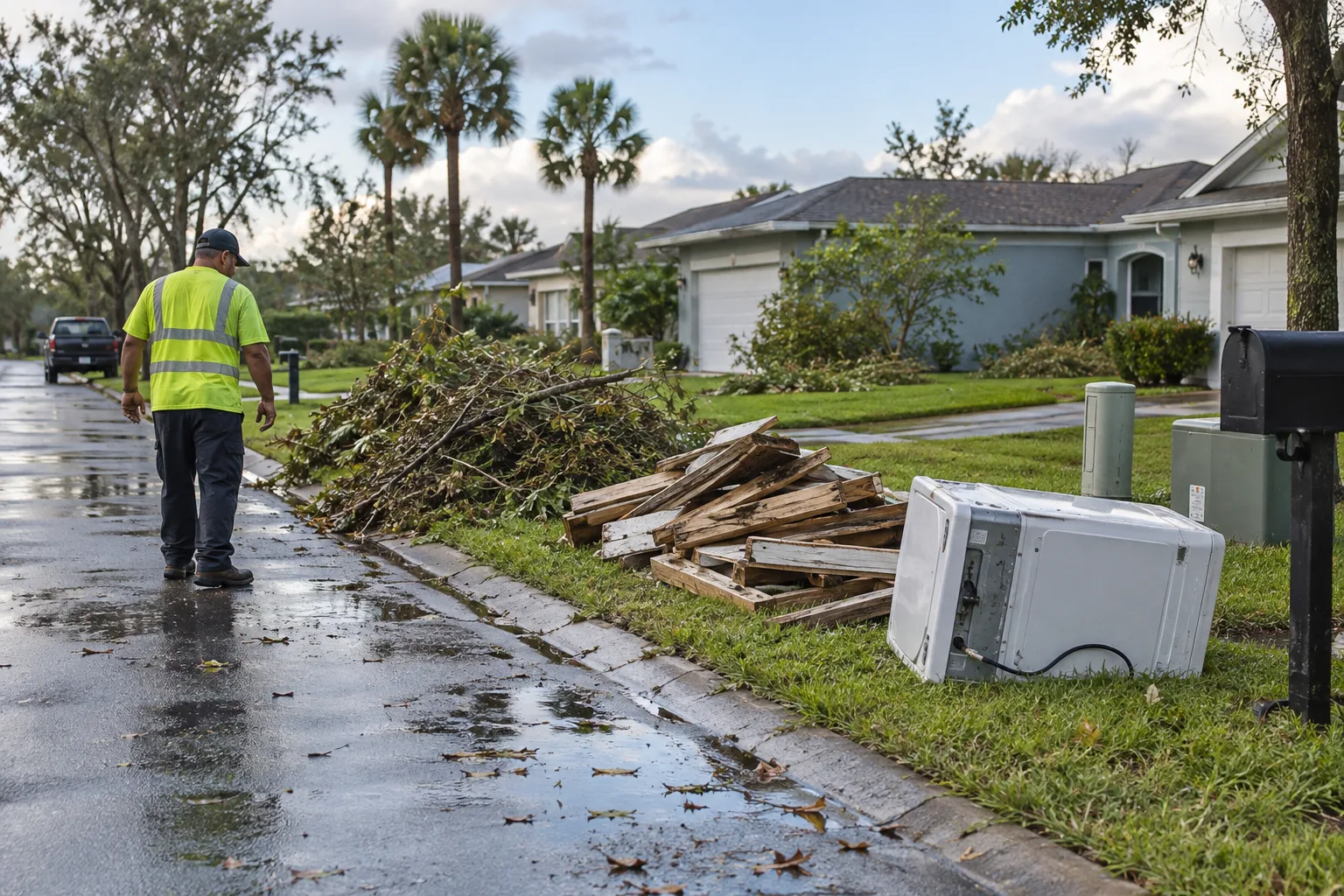
Clean vegetation, construction material, appliances, and hazardous waste should not become one mixed pile.
Prepare an estimate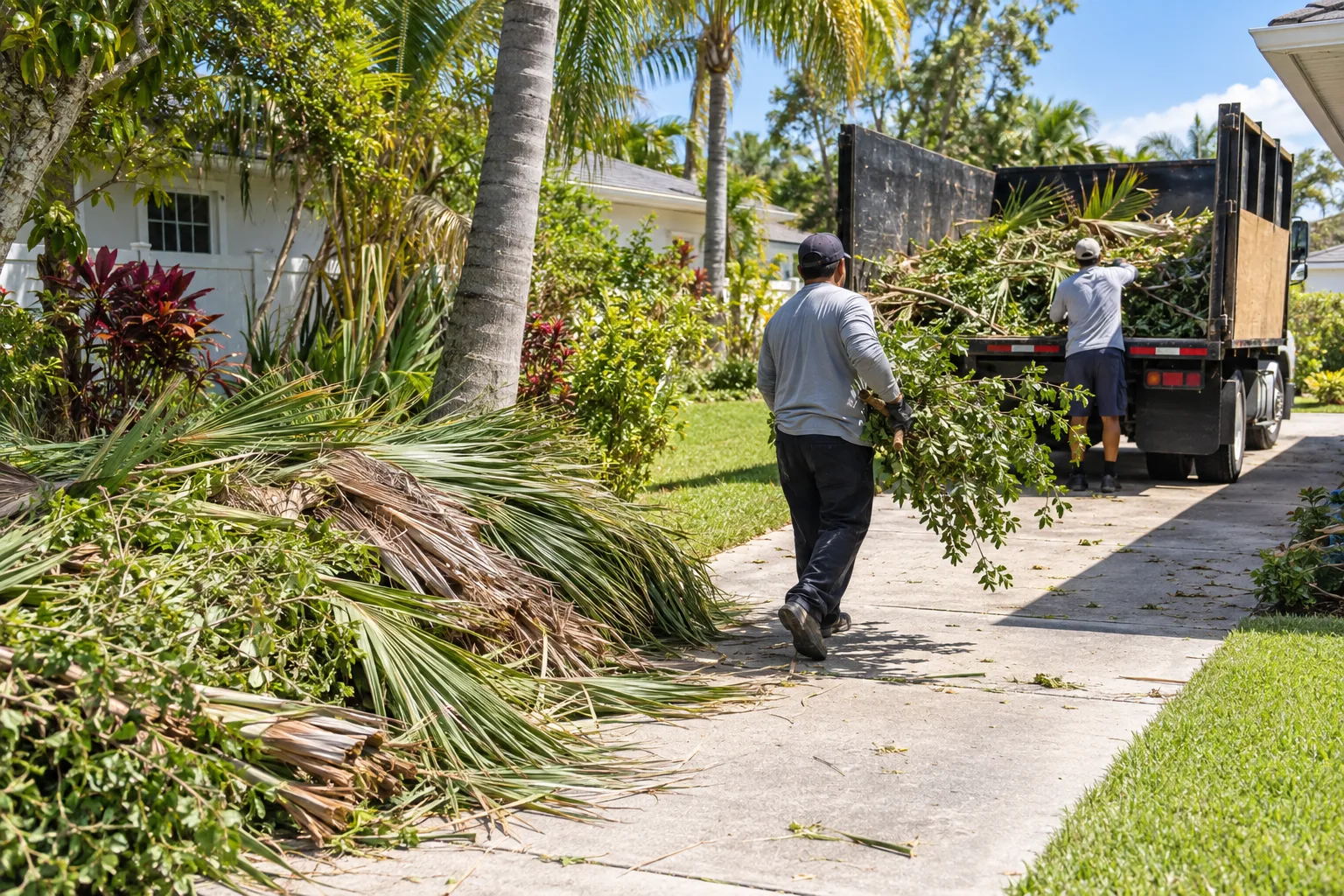
Scope before schedule
Yard debris removal can cover routine trimming, brush, palm fronds, and separated storm material. The key questions are who produced the debris, how it is separated, whether equipment can reach it, and whether the pile contains treated wood, fencing, soil, household garbage, or hazardous material.
Commonly planned
- Branches, brush, and palm fronds
- Bagged or containerized leaves when approved
- Small logs and clean vegetative debris after assessment
- Separated storm debris categories
- Yard piles with a clear loading route
Needs another plan
- Hazardous waste, fuel, paint, batteries, and chemicals
- Live trees or dangerous tree work
- Mixed soil, concrete, roofing, or demolition debris unless approved
- Downed utility lines or debris near energized equipment
- Contaminated or unknown material
Prepare the route
- Keep vegetation separate from construction material and household trash.
- Keep piles away from hydrants, poles, meters, mailboxes, and parked cars.
- Mention stumps, large logs, soil, fencing, or treated lumber.
- Do not approach downed lines or unstable trees.
- Share pile dimensions and a photo that shows truck access.
What changes the estimate
Item count is only one part of the job.
Use the preparation checklist for this service.
Read the guideQuestions for this load
Can storm debris all go in one pile?
Local programs commonly require separate piles for vegetation, construction material, appliances, hazardous waste, and household garbage. A private pickup also needs the categories identified.
Do you cut down trees?
This page covers debris already on the ground. Live, leaning, or unstable trees need a qualified tree professional.
What about fencing or deck boards?
Those are construction material, not clean yard waste. Keep them separate and share photos before the job is planned.