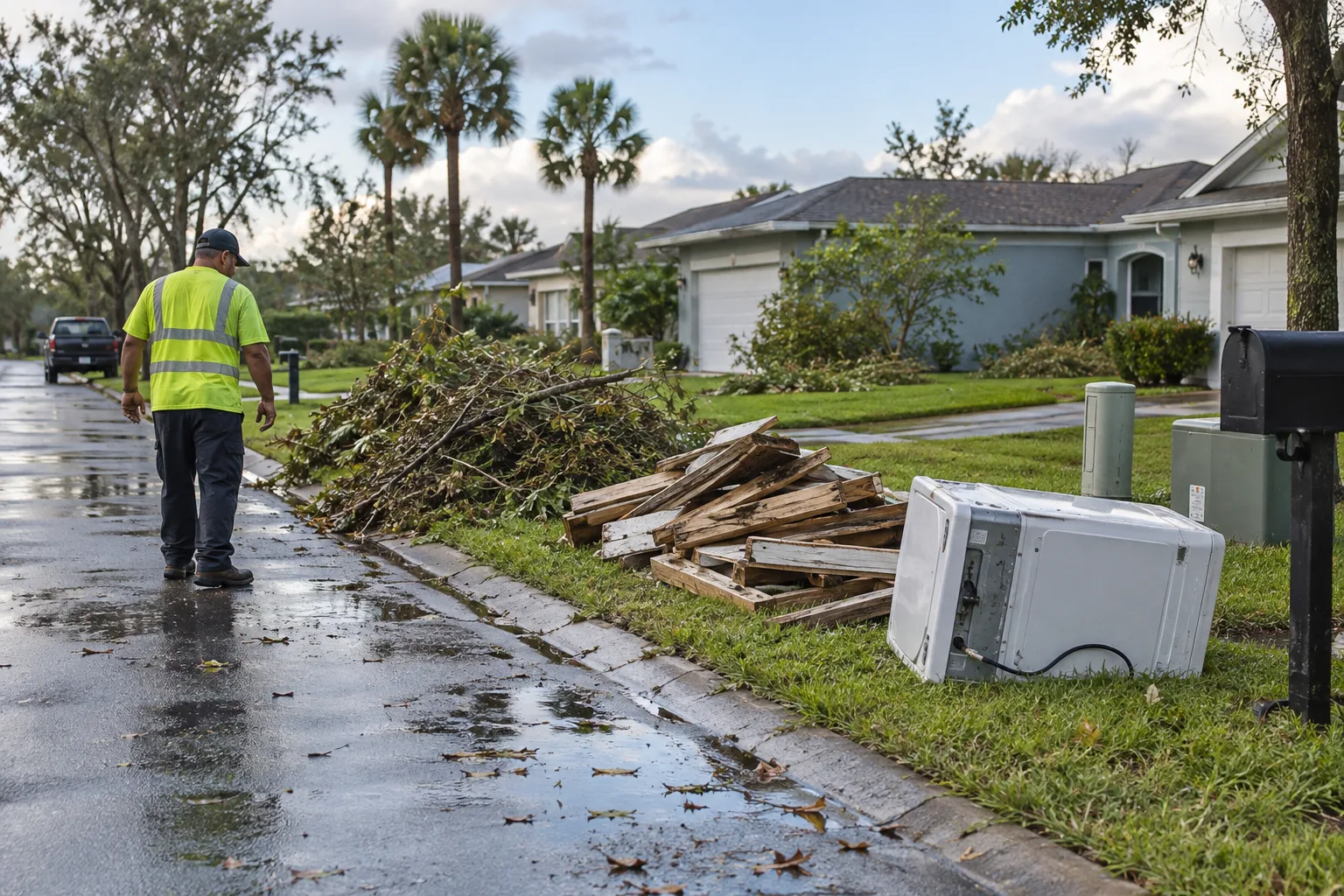
Separate storm debris by material before collection: vegetation, construction material, appliances, electronics, hazardous waste, and ordinary household garbage. Mixed piles slow collection and can send restricted material into the wrong stream.
Use six distinct groups
| Group | Examples | Keep out |
|---|---|---|
| Vegetation | Branches, palm fronds, logs, leaves | Fencing, treated lumber, plastic bags unless required |
| Construction | Drywall, lumber, roofing, carpet, damaged cabinets | Paint, fuel, chemicals, household garbage |
| Appliances | Refrigerator, washer, dryer, stove | Food, loose shelving, leaking fluids |
| Electronics | Televisions, computers, stereos | Loose batteries when the local program separates them |
| Hazardous waste | Paint, pesticides, oil, batteries, compressed gas | All ordinary curbside piles |
| Household garbage | Bagged food waste, paper, packaging | Branches, building debris, chemicals |
Protect collection access
Place debris only where the responsible local authority permits it. Keep piles away from hydrants, mailboxes, utility poles, transformers, meters, trees, parked vehicles, sidewalks, and travel lanes. Do not put material under low wires or near a downed line. If a line, tree, roof, or structure looks unstable, stay away and contact the proper emergency or utility service.
Check the rule for the exact address
Storm collection changes with the city, county, severity of the event, and property type. Gulfport’s current guidance asks residents to separate six categories and keep debris out of alleys. Clearwater asks for separate piles and notes different responsibility for some commercial and condominium properties. Tampa’s ordinary S.W.E.E.P. rules are not a substitute for event-specific storm instructions.
- City of Gulfport hurricane debris guidance
- City of Clearwater storm-debris guidance
- City of Tampa S.W.E.E.P. guidance
Photograph the pile before arranging private removal
Take one wide image that shows volume and truck access, then closer images for appliances, large logs, construction material, or anything whose category is uncertain. Mention wet material, soil, concrete, fencing, roofing, or treated lumber because weight and disposal requirements differ from clean branches.
Private removal does not make hazardous material ordinary junk. Keep restricted categories separate and use the responsible program. For clean vegetation and approved mixed storm material, review the yard debris removal scope.