Appliance Removal in Tampa, FL
An appliance is ready to move only after utilities, contents, water, and the exit route are handled.
Prepare an estimate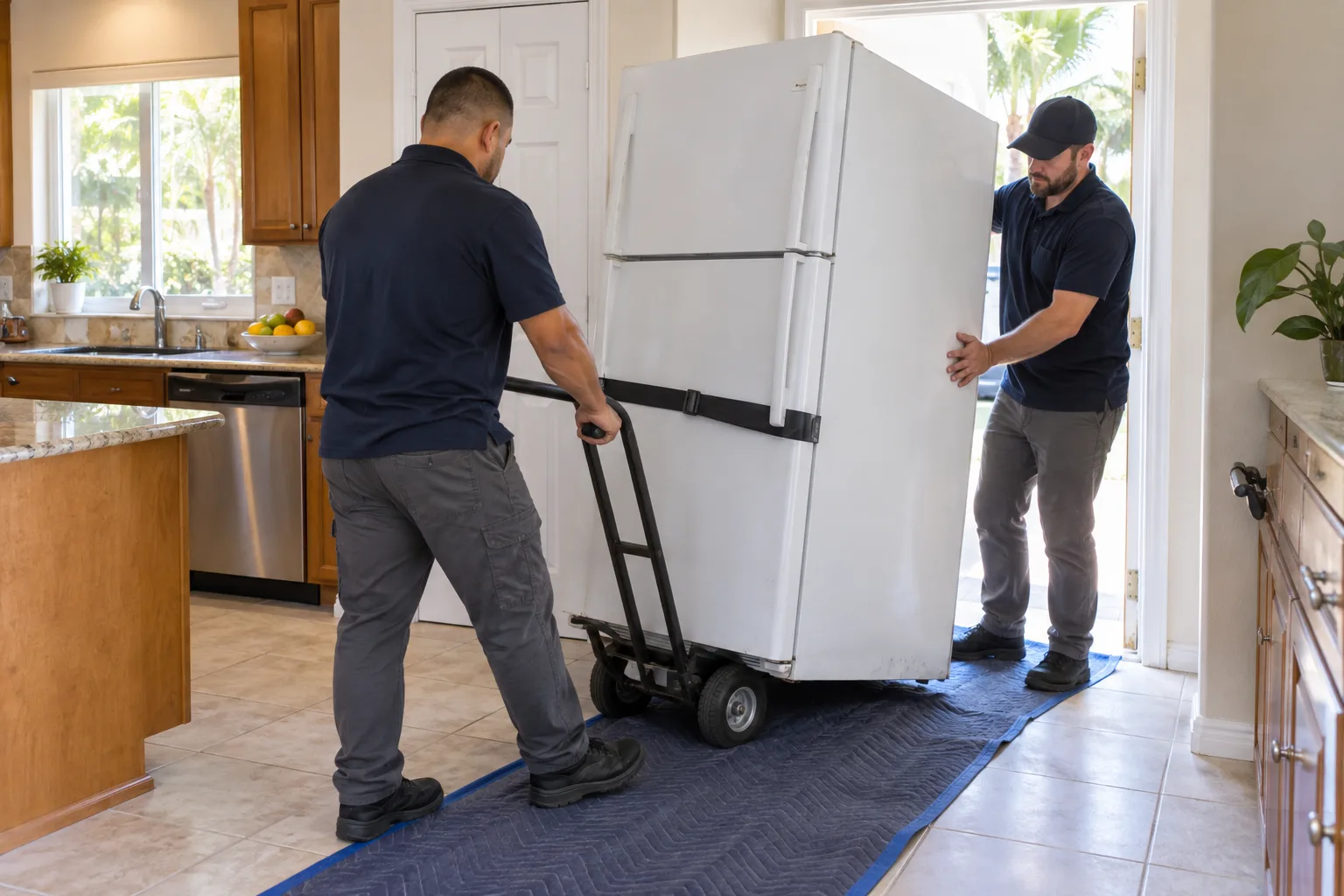
Scope before schedule
Appliance removal starts with safe disconnection. The customer should arrange qualified help for gas, hardwired electrical, plumbing, or refrigerant work when needed. Dimensions, doors, hoses, stairs, and surface protection should be part of the pickup plan.
Commonly planned
- Refrigerators and freezers that are empty and ready to move
- Washers and dryers
- Ranges, ovens, and dishwashers after proper disconnection
- Microwaves and small household appliances
- Water heaters when safely disconnected and approved in advance
Needs another plan
- Live gas, electrical, or water connections
- Refrigerant removal or appliance repair
- Leaking, contaminated, or pest-affected units without assessment
- Built-in appliances that still require removal from cabinetry
- Commercial equipment unless approved
Prepare the route
- Empty food, shelves, lint, and personal contents.
- Defrost freezers early enough to drain and dry.
- Arrange proper utility disconnection.
- Secure doors, racks, cords, and hoses.
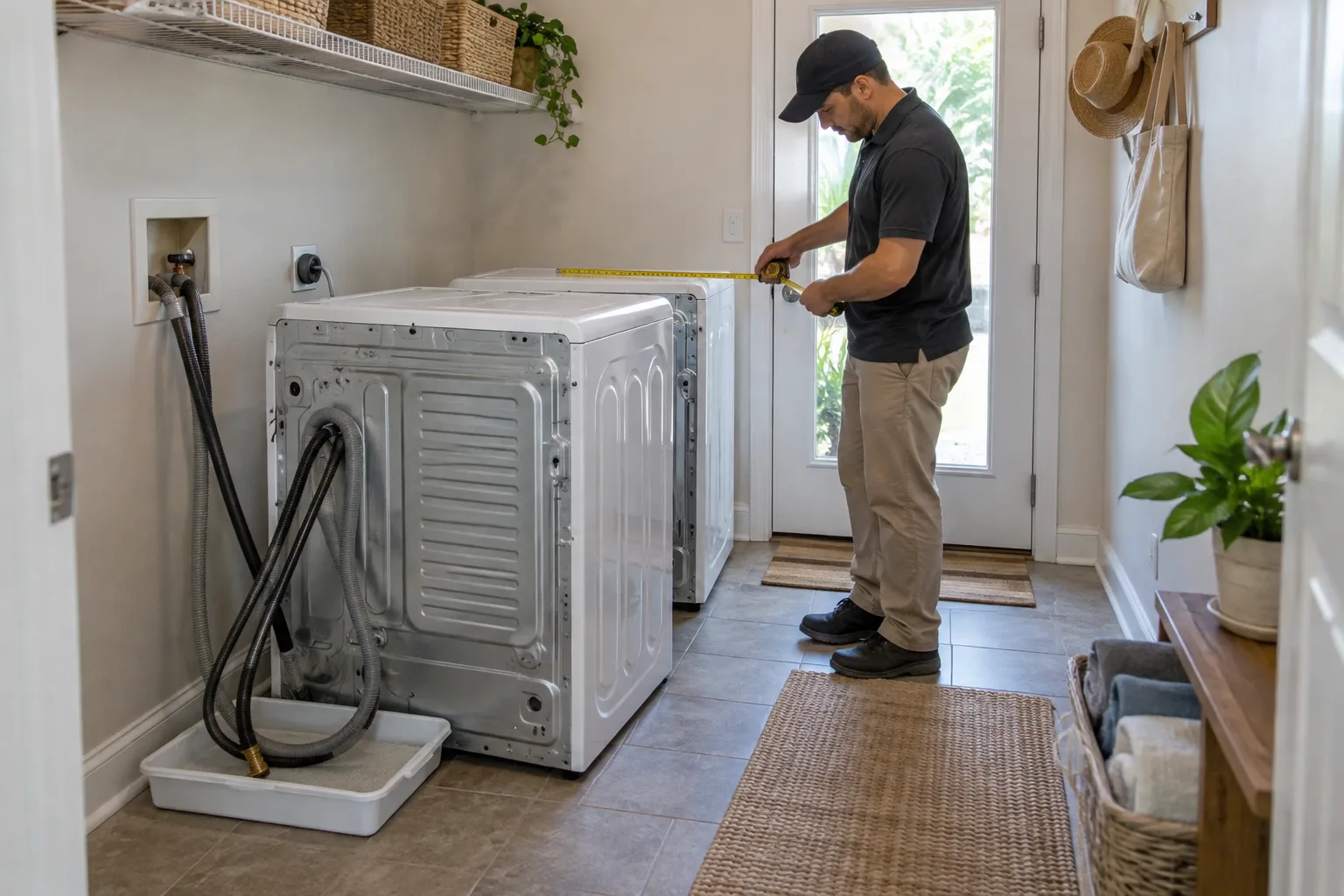
- Measure the appliance and the full route to the exit.
What changes the estimate
Item count is only one part of the job.
Use the preparation checklist for this service.
Read the guideQuestions for this load
Do you disconnect appliances?
Do not assume it. Gas, hardwired electrical, plumbing, and refrigerant work should be handled by a qualified person before pickup.
Why does a refrigerator need special disposal?
Refrigerant-containing appliances are subject to federal safe-disposal rules. The downstream facility must handle refrigerant correctly.
Should refrigerator doors be removed?
Requirements vary by collection method and local rules. For a crew pickup, secure the doors and confirm instructions before changing the appliance.