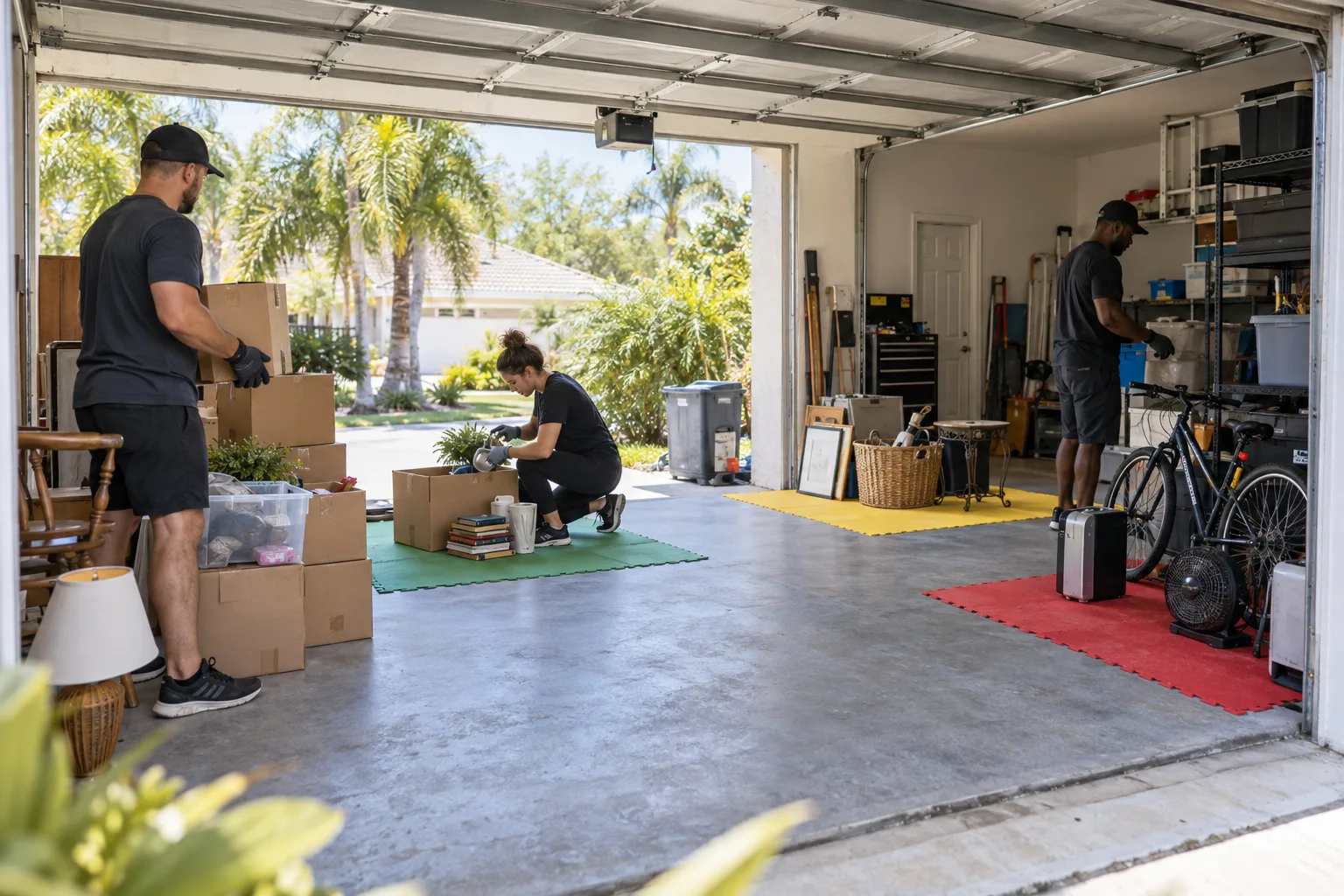
A garage cleanout works better with four zones: keep, remove, special handling, and decide later. The fourth zone prevents every uncertain item from stopping the job.
Set the boundaries first
Use four corners, tarps, or rows of boxes. Keep a clear aisle from the back of the garage to the door. Do not make piles so tall that labels, containers, or unstable items disappear underneath them.
| Zone | Put here | Rule |
|---|---|---|
| Keep | Tools, seasonal items, sporting goods, records | Give each keeper a real storage location |
| Remove | Approved furniture, empty boxes, broken household goods | Only items with a final decision enter this zone |
| Special handling | Paint, chemicals, batteries, fuel, propane, electronics | Keep sealed, upright, and separate; check local disposal rules |
| Decide later | Unknown boxes, family items, incomplete sets | Cap the zone by space or box count |
Pull small, important items before bulk sorting
Search drawers, tool chests, bags, and boxes for keys, vehicle titles, tax papers, photographs, jewelry, cash, medications, and devices. A large cleanout moves quickly once loading begins, so protect small items before they sit beside removal material.
Keep restricted material in its original container
Do not combine leftover liquids or pour them into drains, soil, or trash bags. Keep paint, solvents, pesticides, fuel, automotive fluids, batteries, and pressurized cylinders separate. If a label is missing or a container is damaged, stop moving it and ask the responsible household-hazardous-waste program what to do.
Temple Terrace, Pinellas Park, Tampa, and nearby cities publish different rules for yard debris, electronics, chemicals, appliances, and bulk material. The address determines the responsible program. Start with the official city or county page, not a rule copied from a neighboring municipality.
Work one shelf or wall at a time
- Empty one contained area.
- Send each object directly to a zone.
- Return keepers to a clean shelf only after that shelf is wiped down.
- Photograph the remove and special-handling zones before requesting pickup.
- Stop when the decide-later area reaches its cap.
The result does not need to be a magazine-ready garage. The useful finish line is a clear floor, safe access, known restricted items, and storage that matches what the household chose to keep.
See the garage cleanout service scope for accepted-item questions and estimate factors.